Most security tools will tell you what they block. Far fewer will tell you, in adversary terms, what they actually cover, and what they don’t. That distinction is the entire reason attack techniques libraries exist: they describe security, and gaps in security, in the same language attackers actually use.
This guide explains what a cybersecurity attack techniques library is, how it relates to the widely adopted MITRE ATT&CK framework, and how security teams use one to validate detection coverage, red-team realistically, and communicate risk in terms that go beyond a simple pass or fail scanner result.
Table of Contents
- What Is a Cybersecurity Attack Techniques Library?
- Why Attack Technique Mapping Matters More Than Feature Lists
- How Security Teams Use an Attack Techniques Library
- Attack Technique Libraries vs Vulnerability Databases
- Getting Started: A Practical Workflow
- Common Pitfalls When Using a Technique Library
- Explore the CyberSanso Attack Techniques Library
What Is a Cybersecurity Attack Techniques Library?
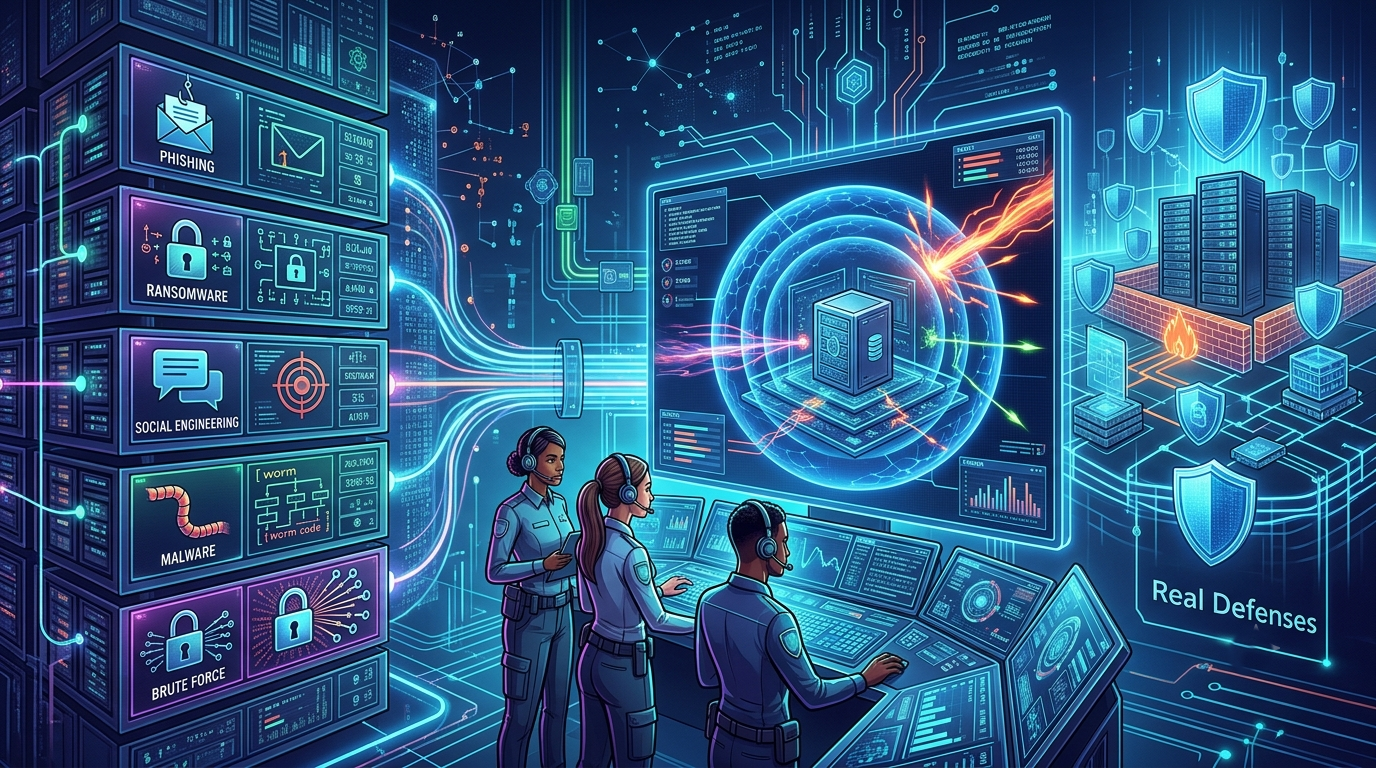
An attack techniques library is a structured, searchable catalog of the specific methods attackers use at each stage of an intrusion, from initial access and credential theft through lateral movement and data exfiltration. Each technique is documented with how it works, what it looks like in telemetry, and which tools or controls typically detect or prevent it.
The most widely referenced foundation for this kind of library is the MITRE ATT&CK framework, a free, community-maintained knowledge base that organizes real-world adversary behavior into tactics (the attacker’s goal, like ‘privilege escalation’) and techniques (the specific method used to achieve it). Sub-techniques go a level deeper still, documenting variations on a method that might require different detection logic despite sharing the same broad category.
What makes this format valuable is its grounding in observed reality rather than theory. Techniques are added to frameworks like ATT&CK based on documented incidents and threat intelligence reporting, not hypothetical attack paths, which means the library reflects how adversaries are actually behaving rather than how a vendor imagines they might.
Why Attack Technique Mapping Matters More Than Feature Lists
A vendor claiming their product stops ‘99% of threats’ is making a marketing statement, not a technical one. The same claim mapped to attack techniques might reveal strong coverage of common malware delivery methods but weak or nonexistent coverage of living-off-the-land techniques that use legitimate system tools to avoid detection.
Mapping your defenses against a structured technique library replaces vague confidence with a concrete, testable picture: which techniques can your current stack detect, which can it only log, and which would go through completely unnoticed. That level of specificity is difficult to get any other way short of a full red-team engagement.
How Security Teams Use an Attack Techniques Library
Validating Detection Coverage
SOC teams map their existing detection rules and tools against the full technique library to identify coverage gaps, often visualized as a heat map showing which techniques are well covered, partially covered, or entirely unmonitored. This exercise alone frequently surfaces gaps that had gone unnoticed for years, simply because no one had looked at coverage from the adversary’s perspective before.
Purple Teaming and Realistic Testing
Rather than testing against generic malware samples, red and blue teams use documented techniques to simulate specific, real adversary behavior, then measure whether the blue team’s detections actually fire as expected. This turns a purple team exercise from a one-off event into a repeatable benchmark that can be re-run after every major tooling or configuration change.
Vendor Evaluation
Buyers increasingly ask security vendors to map their product’s detection capabilities directly to attack technique IDs, turning an abstract capability claim into a checkable, technique-by-technique comparison across competing tools. This same mapping also makes it far easier to justify a purchase internally, since the business case shifts from a subjective feature comparison to a concrete list of previously undetectable techniques the new tool would close.
Communicating Risk to Leadership
Technique-based reporting translates technical gaps into business language leadership can act on: instead of ‘we have a detection gap,’ a report can say precisely which stage of a realistic attack path would currently go unnoticed, and what specific investment would close it.
Onboarding and Training
New SOC analysts often learn faster from a structured technique library than from ad hoc incident write-ups, since each entry connects a concrete method to the telemetry it produces, building pattern recognition that transfers directly to real alert triage.
Attack Technique Libraries vs Vulnerability Databases
It’s easy to conflate these two resources since both get used heavily by security teams, but they answer fundamentally different questions and neither one replaces the other.
| Aspect | Attack Technique Library | Vulnerability Database (e.g., CVE/NVD) |
|---|---|---|
| What it catalogs | Adversary behaviors and methods | Specific software or hardware flaws |
| Primary use | Detection and defense validation | Patch prioritization |
| Typical consumer | SOC analysts, red/blue teams | IT and vulnerability management teams |
| Update trigger | New observed adversary behavior | New disclosed software flaw |
The two are complementary, not competing. A vulnerability database tells you what could be exploited; an attack techniques library tells you how attackers actually behave once they’re in, regardless of which specific vulnerability got them there. Mature security programs draw on both: vulnerability data drives the patching queue, while technique data drives detection engineering and tabletop planning.
Getting Started: A Practical Workflow
Attempting comprehensive coverage of every documented technique on day one is a common way security teams burn out on this approach. A staged, risk-prioritized rollout works far better in practice:
- Identify your organization’s most likely threat actors or attack scenarios based on your industry and asset profile.
- Select the subset of techniques most relevant to those scenarios rather than attempting full framework coverage at once.
- Map your current detection tools and rules against that subset to identify coverage gaps.
- Prioritize closing gaps in techniques tied to your highest-value assets or most likely attack paths first.
- Re-test coverage periodically, since both attacker behavior and your own tool configuration change over time.
Common Pitfalls When Using a Technique Library
- Trying to achieve 100% technique coverage at once instead of prioritizing by realistic risk.
- Treating a single detection rule as ‘coverage’ without validating it actually fires during realistic testing.
- Ignoring how techniques evolve, adversaries frequently modify methods specifically to evade known detections.
- Using the library only for red-team exercises instead of also informing everyday detection engineering work.
- Assuming framework coverage automatically equals real-world protection without periodic validation testing.
Explore the CyberSanso Attack Techniques Library
CyberSanso’s Attack Types and Techniques Library lets security teams look up documented adversary methods and cross-reference which vendor tools in our database claim coverage for each one, making it easier to validate marketing claims against a shared, technique-level standard before a purchase or a tabletop exercise. It’s designed to sit alongside our Live CVE Vulnerability Tracker so teams can move between ‘what could be exploited’ and ‘how attackers actually behave’ without switching platforms.
Key Takeaways
- An attack techniques library catalogs how adversaries actually operate, not just what vulnerabilities exist.
- MITRE ATT&CK is the most widely adopted foundation for organizing tactics and techniques into a structured framework.
- Mapping tools against a technique library replaces vague vendor claims with testable, specific coverage data.
- Technique libraries and vulnerability databases are complementary: one covers adversary behavior, the other covers flaws.
- Prioritize technique coverage based on your realistic threat scenarios rather than attempting full coverage at once.
- Coverage should be re-tested periodically since both attacker methods and your own environment change over time.
Conclusion
An attack techniques library turns cybersecurity from a game of vague confidence into a discipline of testable, specific claims. Instead of trusting that a tool ‘stops threats,’ security teams can point to exactly which adversary techniques are detected, which are only logged, and which would slip through entirely.
That specificity pays off well beyond red-team exercises. It sharpens vendor evaluations, focuses detection engineering effort where it matters most, and gives security leaders a much more precise way to explain risk to the people who ultimately have to fund closing the gaps. Teams that adopt this approach consistently report clearer prioritization conversations and fewer surprises during real incidents, simply because they already know, in advance, where their blind spots are.
FAQs
What is a cybersecurity attack techniques library?
It’s a structured catalog of the specific methods attackers use at each stage of an intrusion, documenting how each technique works and how it can typically be detected or prevented.
How does an attack techniques library relate to MITRE ATT&CK?
MITRE ATT&CK is the most widely used foundation for this kind of library. It organizes real-world adversary behavior into tactics, an attacker’s goal, and techniques, the specific methods used to achieve that goal.
Is an attack techniques library the same as a vulnerability database?
No. A vulnerability database like the NVD catalogs specific software flaws. An attack techniques library catalogs adversary behavior and methods, which is useful regardless of which specific vulnerability was used to gain access.
Who uses attack technique libraries day to day?
Primarily SOC analysts, detection engineers, and red and blue teams, though procurement and security leadership teams increasingly use them to evaluate vendor coverage claims and communicate risk.
Can a small security team realistically use a technique library?
Yes, by focusing on a prioritized subset of techniques most relevant to their specific threat scenarios rather than attempting comprehensive coverage across the entire framework at once.
How often is the MITRE ATT&CK framework updated?
MITRE updates ATT&CK periodically as new adversary behavior is observed and documented, so mature security programs review their technique coverage on a recurring basis rather than treating it as a one-time exercise.
Can attack technique mapping help during vendor evaluation?
Yes. Asking a vendor to map their product’s detection capabilities to specific technique IDs turns a general capability claim into a checkable, apples-to-apples comparison against competing tools.
Validate Your Defenses Against Real Adversary Techniques
Cross-reference documented attack techniques with vendor tools in the CyberSanso database to see which defenses actually map to real adversary behavior, not just marketing claims.